Current research

Scholarship in Progress

Books, edited volumes, and other projects currently in progress.

Earth photographed as a pale blue dot in a ray of sunlight

Books

Books

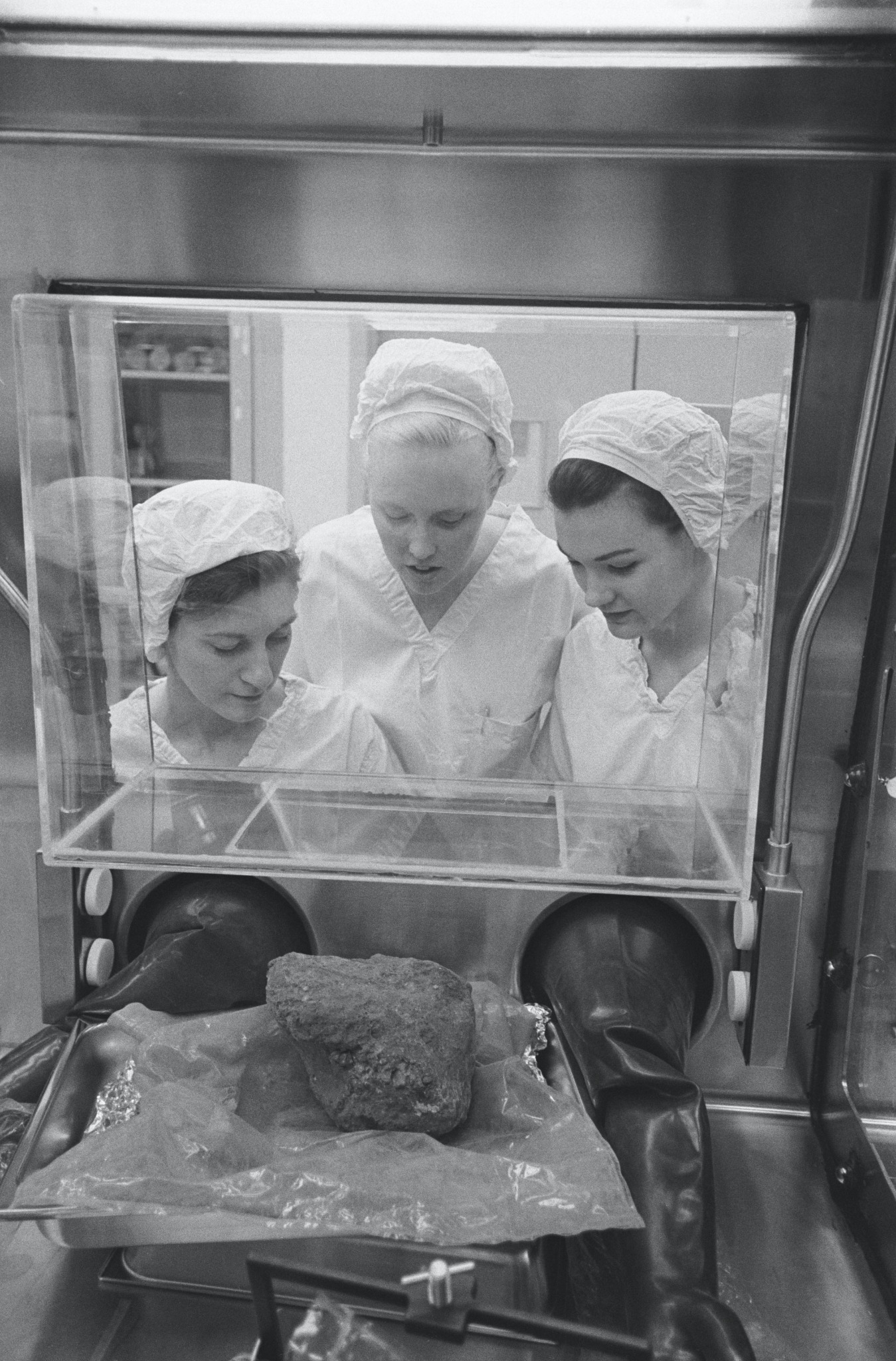
Researchers examining a lunar sample inside a protective laboratory cabinet
01

Breach

Microbes, Moon Landings, and the Hidden Biosecurity Crisis of the Space Age

With Asif Siddiqi

When sailing ships departed Europe in the fifteenth and sixteenth centuries, their most important passengers were invisible. Stowing away in the bodies of sailors were bacteria and viruses that had, for millennia, co-evolved with the dense and closely connected human and animal populations of Eurasia and Africa. The people of the Old World had gained resistance to the diseases caused by these microorganisms, but the oceans formed a barrier that protected vulnerable populations across Australasia, Oceania, and the Americas. That barrier was now breached. Europeans disembarked with the germs responsible for smallpox, measles, influenza, typhus, and many other diseases. Millions died.

In 1959, when the Soviet probe Luna 2 smashed into the Moon and became the first spaceship to reach another world, some scientists warned that another, even more dangerous breach could be imminent. Experiments suggested that microorganisms from Earth could survive aboard probes and multiply in the towering clouds of Venus, the water-carved plains of Mars, and even the temperate subsurface of the Moon. If they did, they could destroy whatever ecosystems existed there. Worse, spacecraft returning to Earth could carry alien microbes. If those microbes could reproduce in terrestrial ecosystems, Earth’s web of life – and potentially humanity itself – seemed in danger.

In Breach, we reveal that the American and Soviet governments scrambled to prevent the spread of microorganisms through the solar system in the first decades of the Space Age. Drawing on private correspondence, confidential reports, interviews, and even training manuals that have never been examined before, we expose how both governments failed to contain the potential spread of these organisms, despite public assurances to the contrary. We show that Soviet and American officials privately acknowledged that they were endangering the Earth and the potential biospheres of other worlds. Yet they chose to accept and conceal this risk in order to address more tangible threats to careers, missions, machines, personnel, and national prestige. The beginning of the Space Age therefore threatened the end of worlds.

This is a true story with the pace and suspense of a science-fiction thriller. It takes readers into secret meetings and breached quarantines, into alien-life scares and worst case scenarios. It shows how whistleblowers were silenced and politicians were deceived. But Breach does more than uncover a bizarre and exciting chapter in the history of space travel. It is also a book with urgent present-day relevance. From runaway climate change to artificial superintelligence, existential risks – meaning risks to the survival or future flourishing of all humans – have never seemed more threatening. By identifying the conditions that encourage people and organizations to gamble with the end of the world, Breach uncovers not just a hidden history—but a blueprint for human survival.
02

The Winds of War

Climate Change and Conflict from the Ice Age to the Anthropocene

Will global warming lead to more wars? Will it change how wars are fought? There may be no more important questions, because it is by affecting conflict that global warming has the greatest potential to drive humanity to extinction. The answers may lie in the past, because although today’s global warming is without precedent, owing to the combination of its magnitude, speed, and human cause, climate change has happened before—and war is at least as old as agriculture.

The Winds of War is the first book that focuses on the connection between past climate changes and organized violence. It explores more than twenty millennia of world history, from the end of the last great Ice Age to the twentieth century. It unfolds in four sections, each devoted a particular theme that connects military and climatic histories. Each section includes three chapters, and each chapter offers three case studies. Together, the case studies trace the history of six continents to illustrate just how far-reaching and wide-ranging the link between climatic and military histories truly was.

The Winds of War argues that climatic changes have long had diverse but often counterintuitive or subtle influences on conflict, both during and before the era of human-caused warming. It takes readers through the complex and often messy process of identifying connections between climate changes and social changes, and it emphasizes the uncertainties that can complicate this work – and make it more interesting. It is a book, in other words, that not only provides readers with fresh perspectives on the past, and of the relationship of the past to the present, but also guides readers through the means by which scholars develop knowledge—in this case, by attempting to discern the influence of climate change on human affairs. In a sweeping conclusion, the book considers how we can learn from past experience, and what we can do to mitigate what may be the gravest risk that climate change poses in the coming century.

03

The Atlas of Global Environmental History

300,000 Years on a Restless Planet

With J. R. McNeill and Geoffrey Wallace

From global warming to the insect apocalypse, today’s environmental crises cannot be fully understood, let alone addressed effectively, without analyzing the past. History alone can tell us when and where today’s crises began, as well as how and why they unfolded. It can also reveal whether present-day environmental disasters are truly unique and whether past populations have overcome similar challenges. Environmental history – the kind of history that considers how environments and people have influenced one another – may therefore hold the key to safeguarding a livable future for humanity on Earth.

Environmental historians have long created striking visualizations – especially maps – to effectively communicate their findings and connect with a broad audience. Owing to the increasingly widespread use of Geographic Information Systems (GIS) software, remote sensing, and other new technologies, these visualizations have become increasingly important for the field. Yet at present there is no atlas of global environmental history. As a result, many of the best visualizations of history’s environmental changes are either not accessible or available online without the careful interpretation they might have received in an atlas. Moreover, there is no clearing house for these visualizations – no way of viewing them together. The incomplete and atomized nature of environmental visualizations at present weakens the field and undercuts its potential contribution to scholarship, activism, and policy development.

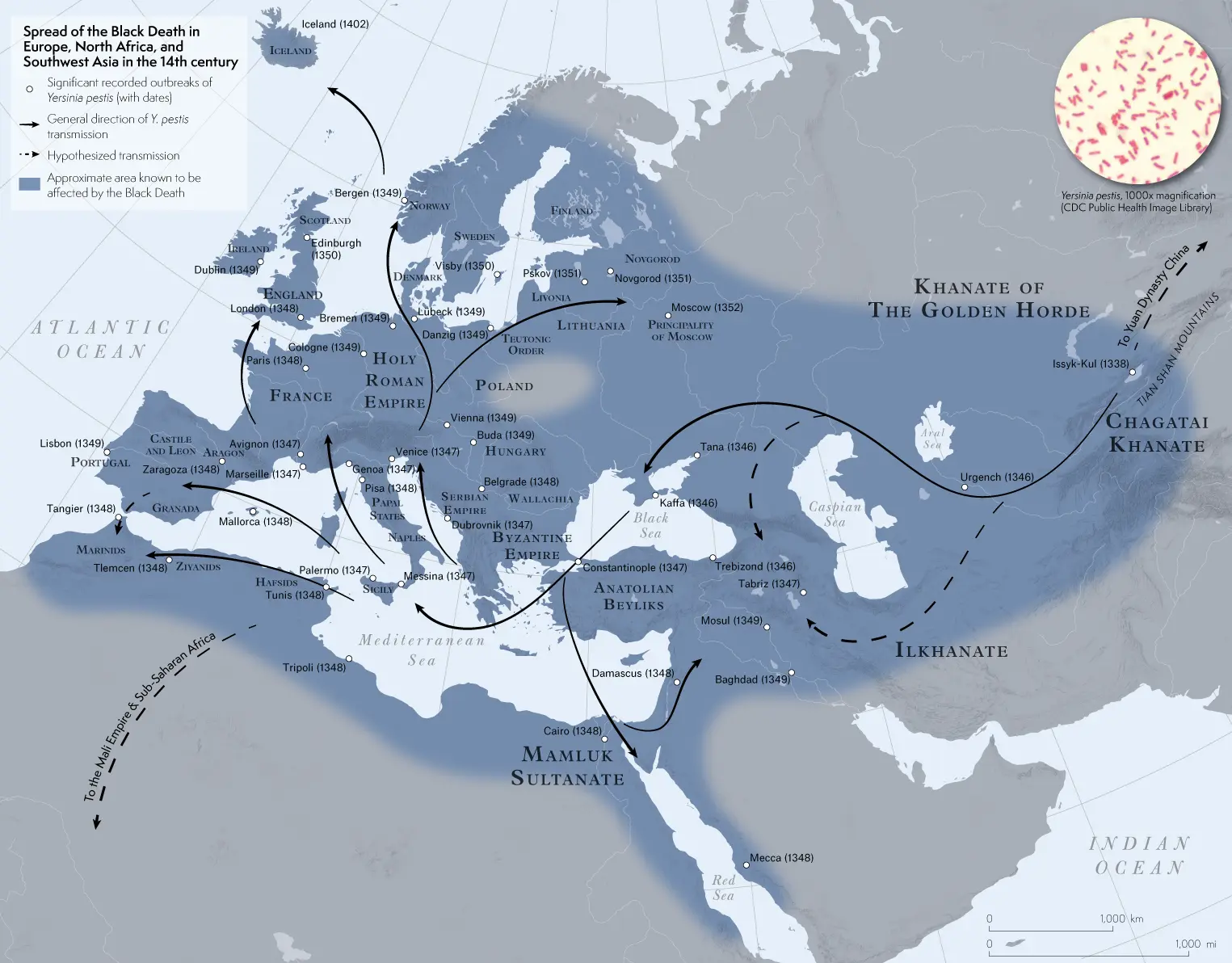
We are therefore creating the first atlas of global environmental history. We are developing cutting-edge maps and infographics that detail mutual interactions between people and nature from the evolution of Homo sapiens roughly 300,000 years ago to the present. We are visualizing, for example, the sweeping landscape changes permitted by hominid control of fire; the environmental forces that encouraged ancient waves of human migration out Africa; the combined pressures of hunting and climate change that drove large mammals to extinction in one continent after another; the ecosystem transformations that accompanied the emergence of agriculture; the environmental interventions of the Roman Empire and the Chinese Han Dynasty; the desertion of classical Mayan settlements in the face of decades-long drought; the spread of the Black Death and successive waves of plague across Eurasia; the introduction of invasive species – plants, animals, and microbes – that accompanied and facilitated European imperialism; the environmental despoliation of the First and Second World Wars; the massive twentieth-century restructuring of waterways for transportation, flood control, and hydroelectric power generation; the geography of Cold War atomic bomb testing; the global erosion of biodiversity in the twentieth century; and today’s climate crisis.

Edited volumes

Edited volumes

01

The Oxford Handbook of Resilience in the History of Climate Change

Lead editor, with J. R. McNeill and Amy Hessl

Earth has warmed by about 1.5 degrees Celsius since the pre-industrial period, and model simulations suggest that, under present emissions trends, it will warm by perhaps three degrees Celsius by the end of the twenty-first century. The combination of the speed, eventual magnitude, and human origin of present-day warming has no parallel in Earth’s history. Yet in the 300,000-year history of humanity, natural forces – including slight changes in Earth’s orbit, modest fluctuations in solar output, and volcanic eruptions – have both abruptly and profoundly changed both global and regional climates.

For over a century, scholars argued that these natural climate changes shortened or interrupted growing seasons and thereby caused or intensified harvest failures in many societies. “History of Climate and Society Studies” (HCSS) – an interdisciplinary field that identifies human responses to past climate change – has been dominated by studies that use statistical or qualitative methods to link these harvest failures to food shortages, famines, outbreaks of epidemic disease, and conflict within or between societies. Many of the most influential HCSS publications conclude that severe or sustained periods of cooling and drought caused some of history’s best-known civilizations to “collapse” – to rapidly lose political organization, socioeconomic complexity, and ultimately population.

Climate histories now inform many dire predictions for humanity’s future, including the common assumption that present-day civilizations would disintegrate if global heating exceeds dangerous thresholds. Yet in recent decades, HCSS scholars increasingly explore the resilience of past communities and societies to climate changes and anomalies. In over 30 chapters, written by nearly 100 authors in many disciplines and six continents, this handbook reveals how populations have been resilient in the face of climate changes from the Last Glacial Maximum (the last “ice age,” in popular parlance) to the present period of extreme warming. Its aim is not only to revise how scholars understand the past, but also to discern common pathways by which populations endured climate change: pathways that may inform present-day policymaking and activism.

02

Changing Climates, Changing Histories

New Perspectives on the History of Climate Change

Co-editor, with Timothy Beach

Scholars in the humanities and social sciences are increasingly working to identify how climate changes and anomalies influenced different dimensions of human history. Exploring past connections between climate and society in six continents, over more than 6,000 years, this volume captures the state-of-the-art in what we call “history of climate and society studies.” Written by a diverse group of international scholars, chapters in the volume consider such topics as the drying of the Sahara Desert; the collapse of the city of Angkor; the role of drought in Mayan history, and gendered pathways to agricultural resilience in eighteenth-century Scotland.

03

Disasters in History

Environments and People in Crisis

Lead editor, with Rowan Jackson

This Oxford University Press volume combines many academic disciplines to explore some of the most important or interesting environmental disasters in human history. We define disasters very broadly, as events or trends that result in widespread loss of life and/or severe reductions in the well-being of populations.

Collectively, our chapters reveal that environmental disasters have been a powerful engine in human history, operating across very different spatial and temporal scales. Our chapters explore the complex intersections between the contextual geography, culture, economy, and politics before and as an outcome of disaster events. They show how disasters operate across very different timescales, ranging from fast onset events associated with natural hazards to slower, synergistic changes that result from multiple isolated or interconnected events coalescing into major historical transformations.

Other research

Other projects: a selection

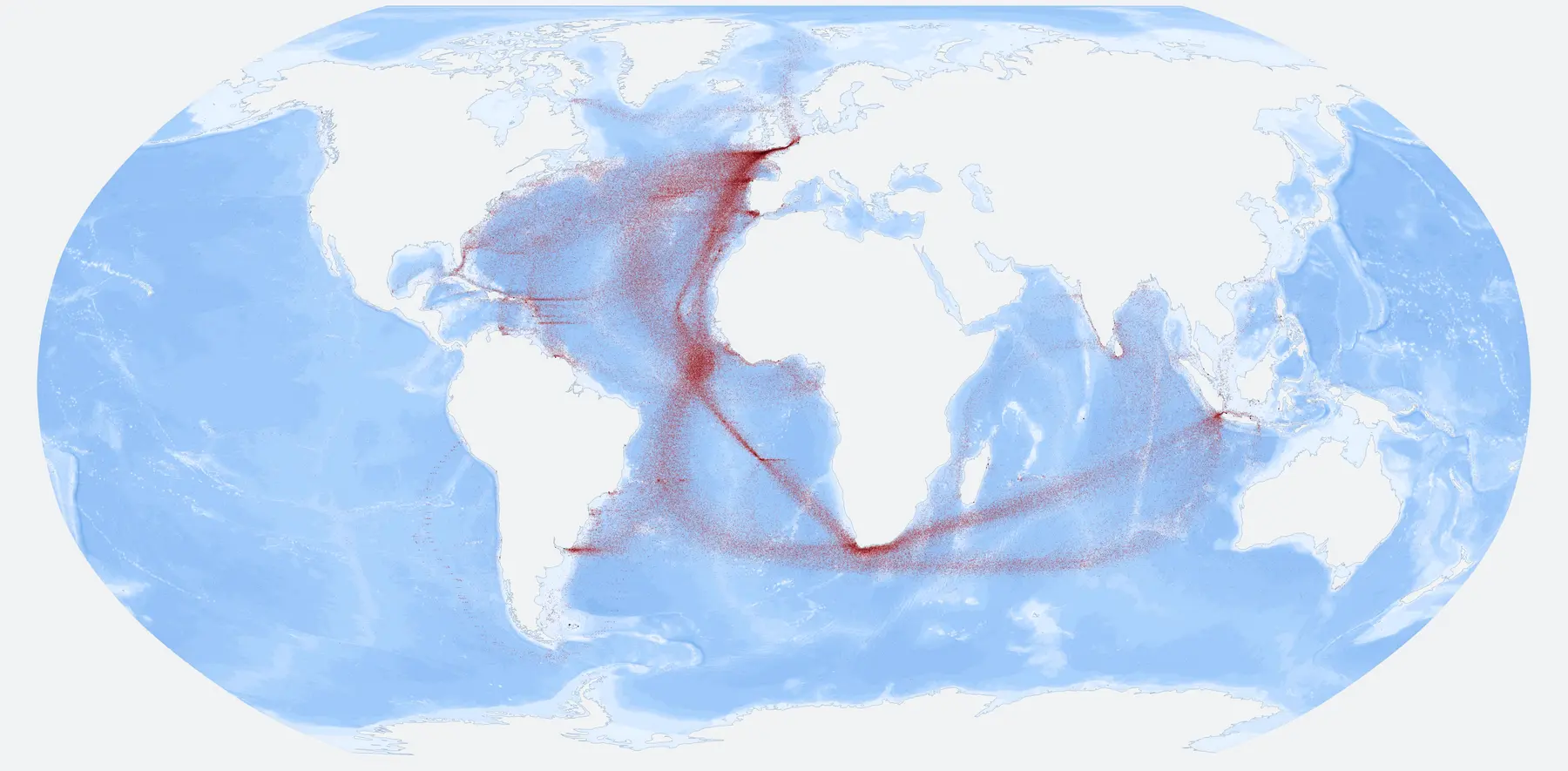
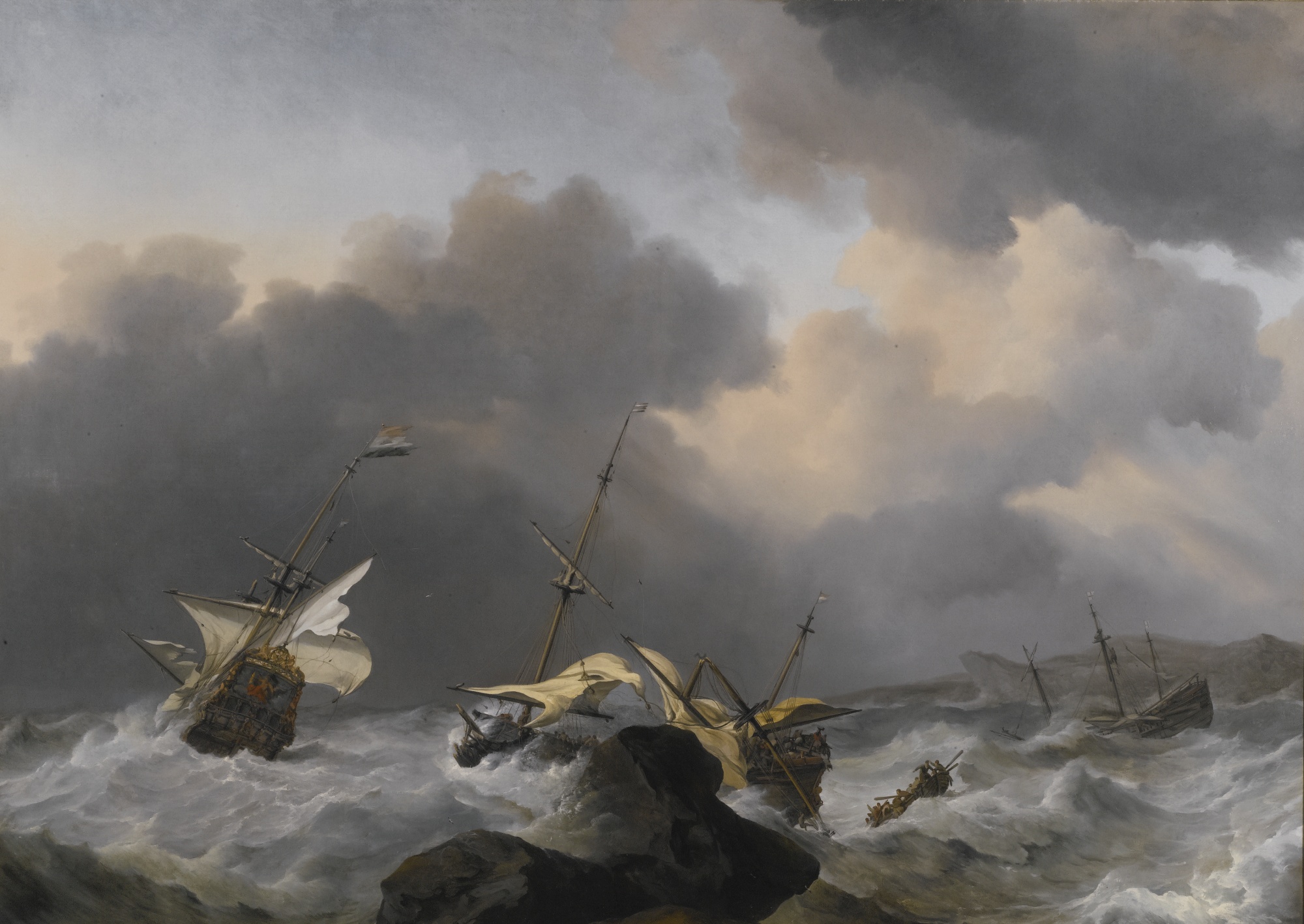
Historic ship routes reconstructed from logbooks

01

Sailors and Circulation

Using Artificial Intelligence to Reconstruct Winds and Shipping

This project employs large language models (LLMs) to quantify weather information in ship logbooks: journals that were compiled by sailors between the seventeenth and nineteenth centuries.

These datasets, which include tens of millions of individual observations, were previously all but indecipherable. Yet I have found that LLMs can be trained to standardize the information in the datasets, and thereby to identify changes in both global patterns of atmospheric circulation before the onset of human-caused warming, and responses by ships and shipping companies.

This work sheds new light on the economic and environmental histories of the industrializing world. What’s more, by creating a baseline with which to interpret today’s changes in atmospheric circulation, it could help governments predict future shifts in precipitation and temperature. It might even allow governments to better assess the costs of geoengineering: purposefully altering the atmosphere to mitigate global warming.

Ancient ruins beneath a red sky

02

Learning from Climate’s Past

History of Climate and Society Studies and Global Warming

Scholars have long studied past climatic fluctuations to help today’s societies survive and thrive in a changing climate. To evaluate how scholars of past climate engage with global warming activism and policy development, this project has developed an unprecedented database of publications that consider the history of climatic changes and anomalies.

The project is revealing that studies on past climate are biased towards analyzing environmental (as opposed to social) changes in world regions that may be least vulnerable to global warming. It is also showing that, although most publications in the field claim to be relevant for present-day efforts to confront global warming, very few explain how they are relevant or provide specific recommendations that could be used to inform climate policymaking and activism. I am now leading efforts to develop principles that can help scholars of past climate engage in present-day efforts to confront global warming. The goal is to more effectively – and transparently – leverage the past to address one of today’s most important challenges.